
7 Days of Wisdom Without Borders Highlights (Day #2)
One Step Closer! UUM Postgraduate Students Gain Critical Research Insights at Hebei Finance University (HFU), China

Photos Muhammad Naufal Norasikin @ Mohd Zulhilmi, Syed Haikal Syafiq Syed Mohd Fazli and Siti Sharah Rajab
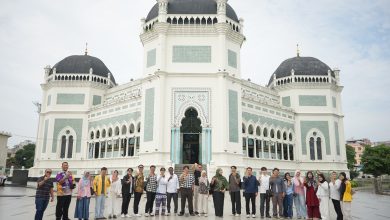
HEBEI, CHINA, 7 December 2025: The Universiti Utara Malaysia (UUM) delegation under the Wisdom Without Borders (WWB) programme arrived in China to embark on the next phase of this dynamic academic networking initiative.
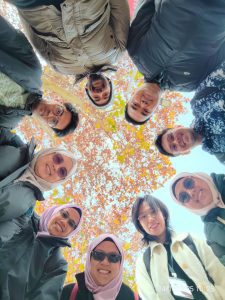
Wisdom Without Borders brings together two of UUM’s flagship international programmes—the One Belt One Road (OBOR) Postgraduate Mobility Programme and Global Scholars Outreach: Malaysia–China Academic Networking. More than a mobility or academic exchange platform, WWB is designed to cultivate globally minded and culturally grounded scholars by fostering human connection, intercultural learning, and sustained scholarly growth. This spirit of openness and intellectual curiosity underpins every activity throughout the seven-day highlight series.
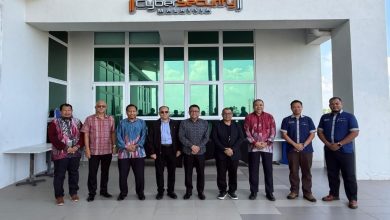
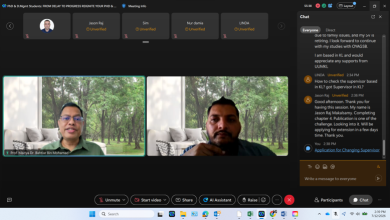
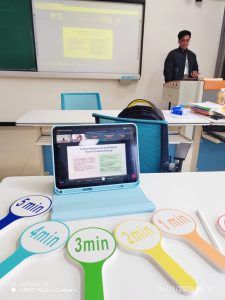
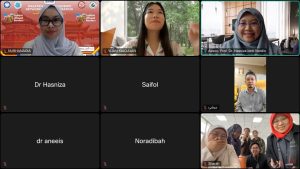
Building on this momentum, the delegation participated in the Postgraduate Academic Empowerment Forum hosted by Hebei Finance University (HFU), signalling a strong commitment to international knowledge exchange and research excellence. Conducted from 8.00 a.m. to 10.00 a.m. via Webex and hosted physically at HFU, the forum showcased a wide range of scholarly interests. Presentations spanned teacher education, instructional quality, language learning, digital transformation, and assessment innovation—all aligned with WWB’s mission to nurture globally ready researchers.
In Room 1, the forum opened with Sun Jiayun, a staff member from HFU’s International Affairs Office and a PhD student at UUM, who also played a key role as liaison for the WWB–HFU collaboration. Her research focused on supporting low-proficiency English learners through structured storytelling techniques, highlighting an innovative approach to reducing anxiety while building speaking confidence.
She was followed by Liu Guoqing, who examined differences between human and AI evaluators in scoring and feedback practices—a timely and significant contribution amid the rapid integration of generative artificial intelligence in language assessment.
Next, Amir Syafiq Amran presented his work on developing a practical mathematics assessment toolkit for rural pupils, underscoring UUM’s commitment to educational equity and context-responsive innovation. The session concluded with Tang Qi, whose study centred on the design and validation of a comprehensive teaching evaluation instrument to strengthen institutional quality assurance at Chongqing Technology and Business University.
Meanwhile, Room 2 featured equally engaging academic discourse. Muhammad Asyraf Shuib introduced a feedback framework that integrates AI tools, peer interaction, and self-reflection to enhance undergraduate ESL learners’ presentation skills. This triadic model reflects the evolving communicative demands of contemporary education.
Yuan Xiaojuan then shared her research on empowering primary English learners through inquiry-based learning, emphasising the value of curiosity-driven instruction in fostering deeper engagement and language confidence among young learners. The session concluded with Nurhanadia Wahab, who explored the interaction between teaching quality, assessment practices, and digital competencies in shaping effective primary education—an area of growing importance as schools adapt to rising pedagogical and technological expectations.
The forum was supported by a distinguished panel of academic experts comprising Dr Yeap Sock Beei, Associate Professor Dr Hasniza Nordin, and Dr Fauzian Kassim. Their analytical and constructive feedback enabled presenters to sharpen methodological approaches, strengthen theoretical alignment, and enhance the coherence of their research arguments—key refinements for postgraduate research at advanced stages. The presenters’ supervisors were also present throughout the forum, offering academic guidance, encouragement, and moral support that further strengthened the students’ confidence and preparedness.
Beyond serving as a platform for research dissemination, the forum provided a valuable developmental experience for the broader WWB delegation. Two UUM PhD candidates, Joharri Shuhaimi and Zhang Zhao—both preparing for their viva voce examinations in early January 2026—and one Master by Research student, Fathini Badrudin, who is approaching her proposal defence, gained important insights by observing the presentations, panel critiques, and scholarly exchanges. These observations offered a clearer understanding of academic expectations, defence dynamics, and the level of rigour required to navigate their upcoming milestones successfully.
For members of the WWB delegation, the forum reaffirmed essential dimensions of postgraduate scholarship, including resilience, reflective practice, and purposeful academic progression. It also highlighted UUM’s continued commitment to supporting its postgraduate students through structured guidance, critical engagement, and sustained mentorship to ensure timely and successful completion.
More importantly, the collaboration between HFU and UUM demonstrated the strength of a shared academic ecosystem built on trust, openness, and mutual respect. The multicultural exchanges, cross-institutional interactions, and collective research experiences enriched the scholarly environment for all participants while expanding professional networks beyond national borders. Ultimately, this dynamic engagement brought both presenting scholars and observing delegates one meaningful step closer to their postgraduate milestones—and to their future roles as contributors to the global academic community. – Joharri Shuhaimi and Nurhafidzah Abu Samah