
Disaster Management Institute, Universiti Utara Malaysia Records Strong Institutional Performance in 2025

News and photo Shahrul Niza Said
SINTOK, 6 January 2026: The Disaster Management Institute (DMI), Universiti Utara Malaysia, concluded 2025 with the successful achievement of all strategic and operational targets, marking a year of sustained institutional performance driven by impactful research, international engagement, national collaboration and inclusive community outreach.
Director of Disaster Management Institute, Dr. Chong Khai Lin said, throughout the year, the institute advanced its mandate in disaster management education and resilience-building through a balanced and integrated focus on policy-relevant research, academic mobility, capacity development and public awareness initiatives. These concerted efforts further positioned Universiti Utara Malaysia as a key contributor to national and regional disaster resilience agenda.
Strategic Partnerships and Research Collaboration
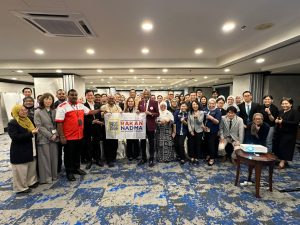
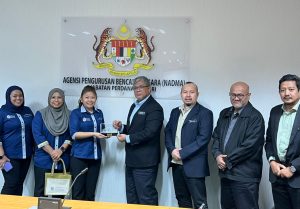
At the national level, DMI strengthened its close collaboration with the National Disaster Management Agency (NADMA) by contributing academic expertise and research-based perspectives to disaster preparedness, response and policy discourse. Collaboration with the Department of Irrigation and Drainage (JPS) was also intensified, particularly in initiatives related to flood risk management, early warning systems and community preparedness.
In the area of research and innovation, the institute advanced a nationally funded project in collaboration with the National Hydraulic Research Institute of Malaysia (NAHRIM), valued at over RM300,000, focusing on water-related disaster risks and hydrological resilience. International research linkages with partner institutions in Japan, China and Taiwan were further strengthened, reinforcing DMI’s global research footprint.
International Mobility and Academic Exchange
Internationalisation remained a core pillar of the institute’s agenda in 2025 through both outbound and inbound mobility programmes involving Kansai University of International Studies (KUINS), Japan, Universitas Gadjah Mada (UGM) and Universitas Atma Jaya Yogyakarta (UAJY), Indonesia. These initiatives fostered reciprocal academic exchange, experiential learning and cross-cultural engagement in the fields of disaster management and sustainability.
International Forum on Community Resilience
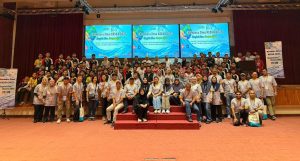
In October 2025, the DMI hosted the International Forum on Empowering Communities Towards a Resilient Society: Global Lessons and Challenges at Bangi Resort Hotel. The forum brought together experts, researchers and practitioners from Malaysia, Japan, Mexico, Vietnam, Indonesia and other countries to share global perspectives on community resilience, risk communication and social connectivity.
Organised in collaboration with Kyoto University and Kagawa University, Japan, and supported by NADMA Malaysia, the forum underscored the importance of cross-border collaboration in advancing resilience and preparedness. The programme was further strengthened through structured knowledge exchange activities, reinforcing long-term academic and professional networks in disaster risk management.
School-Based and Community Engagement Programmes
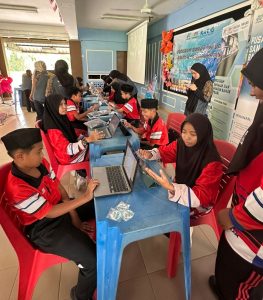
The institute continued to prioritise early disaster education through the KESSA Programme, implemented in collaboration with JPS, The Malay College Kuala Kangsar and Sekolah Menengah Raja Perempuan Kelsom. The programme integrated on-campus engagement with structured online learning modules to enhance accessibility and learning impact.
In parallel, DMI expanded its community-based outreach across Kedah, including participation in the Jeniang Destinasiku programme, held in conjunction with Hari Bertemu Pelanggan Daerah Kuala Muda 2025 at the Sungai Muda Basin. This initiative was undertaken in collaboration with the National Flood Forecasting and Warning Centre and JPS through the National Hydraulic Research Institute of Malaysia.
Public engagement efforts were also extended to high-visibility platforms such as Hari Nelayan dan Peladang Negeri Kedah and The Magnificent Kedah Baling 100, leveraging large public gatherings to promote disaster awareness, water safety and preparedness.
Strength of Internal Collaboration
The successful implementation of DMI’s initiatives throughout 2025 was underpinned by strong internal collaboration among its academic and associate fellows. These included lecturers from multiple Schools at Universiti Utara Malaysia, notably the School of Technology Management and Logistics, the School of Applied Psychology, Social Work and Policy and language instructors from the School of Languages, Civilisation and Philosophy. This interdisciplinary approach significantly enhanced programme delivery, research impact and community engagement.
Moving Forward
With all key performance indicators successfully achieved in 2025, the Disaster Management Institute remains committed to reinforcing its role through strategic partnerships, impactful research, and inclusive outreach. These efforts continue to reinforce Universiti Utara Malaysia’s position as a national reference point in disaster management and resilience-building, while contributing meaningfully to broader societal preparedness and sustainability.