
ALOR SETAR, 10 February 2026: Strong collaboration between experienced university staff and the younger generation is essential to ensure that Universiti Utara Malaysia (UUM) continues to progress and achieve its strategic goals.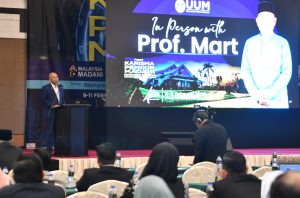
Vice-Chancellor Prof. Dr Ahmad Martadha Mohamed emphasised that the wisdom and experience of senior staff remain invaluable as sources of mentorship, while the energy and innovative ideas of younger staff serve as key drivers of growth.
According to him, the synergy between these two groups is the key to success in steering the university towards its planned strategic direction.
He also expressed his gratitude that the university’s achievements, particularly in terms of rankings, have shown encouraging improvements over the past few years. In addition to its core programmes, progress has also been recorded in the field of education, even though the university is not focused solely on education.
“When any field improves its ranking, the university’s reputation is elevated as a whole. This success does not belong to a single group but is the result of the collective efforts of all its members, from support staff to top management,” he said at the “In Person with Prof. Mart” session, held in conjunction with the “Karisma Pemikir Madani” programme for UUM’s top leadership last night.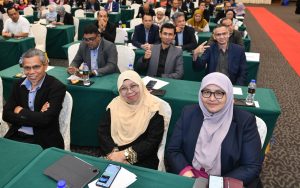
During the session, he underscored that students remain among the university’s most important stakeholders and must always be given priority attention.
He reminded members of the university community to uphold mutual respect at all times, including toward students and students with disabilities, and to remain open to feedback and constructive criticism in the interest of more sustainable campus development.
Beyond student welfare, the well-being of university employees is also a key focus. One initiative introduced is a monthly meeting-free day, aimed at giving staff time to rest, interact, and strengthen relationships through health activities and welfare programmes organised by the university.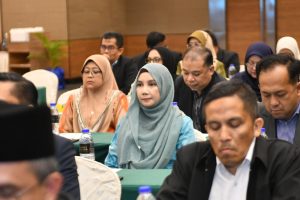
He further explained that efforts to create a conducive working environment also include improvements to policies related to promotions, research, and publications so that more lecturers and staff are given opportunities and support to advance professionally.
At the same time, the Vice-Chancellor expressed concern over the spread of slander and misinformation, which could tarnish the university’s image and reputation.
He warned that public trust in higher education institutions could be undermined if a culture of spreading unverified information is allowed to persist.
“The university was built through the sacrifices and hard work of previous leaders. Our responsibility today is to safeguard the good name of this institution and ensure that the university ecosystem remains conducive, harmonious, and grounded in integrity,” he said.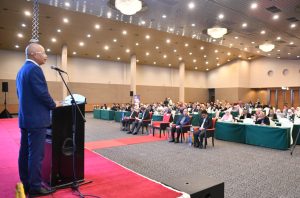
He also outlined UUM’s 12 strategic thrusts, among which is the focus on enhancing the visibility of the university’s scholars and international students at both national and international levels.
A major priority is safeguarding the integrity of research from any form of unhealthy influence, whether internal or external, in line with UUM’s aspiration to become a reputable and high-impact institution.
Prof. Dr Ahmad Martadha voiced concern over the limited involvement of university experts in public discourse, despite their high level of expertise.
He urged scholars to step forward and share their insights through mainstream and social media on national and global issues such as finance, international law, diplomatic relations, environmental sustainability, water resources, halal matters, and Islamic banking.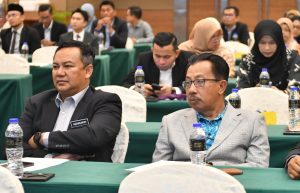
“If the public is unaware of our existence, how can they recognise us as experts?” he asked, emphasising that public engagement and popular writing are just as important as academic publications in creating national impact.
Touching on developments related to higher education, he highlighted recent policy changes, including the placement of Form Six and pre-university programmes under the Ministry of Higher Education (MoHE), which he believes will open new opportunities for universities to contribute more directly to the development of this educational stream.
He also called for greater collaboration with polytechnics, particularly the 10 premier polytechnics that will soon offer bachelor’s degree programmes.
According to him, universities must be proactive in initiating strategic discussions rather than waiting for instructions, so as not to be left behind in an increasingly competitive higher education landscape.
He expressed hope that all schools would nurture more scholars who are courageous, vocal, and willing to contribute their expertise to national development and international networks.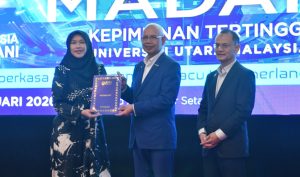
In the pursuit of achievement and rankings, he reminded the attendees that values and manners remain the true core strength of the university and of civilisation.
Prof. Dr Ahmad Martadha cautioned that academic excellence without values could lead to the erosion of the university’s moral foundation.
According to him, values not only strengthen knowledge but also form the basis for harmonious relationships, interactions, and work culture within the organisation.
“Values make us stronger, not only in terms of knowledge, but also in relationships and interactions with colleagues, students, and external parties. Respect needs to be fostered at all levels, whether among administrators, staff, or students,” he said.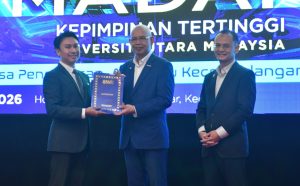
In addition, he called for stronger engagement with alumni. UUM currently has more than 170,000 alumni locally and internationally, many of whom hold influential positions and possess immense potential to contribute through financial support, expertise, and strategic partnerships.
“Schools must be more proactive in approaching their respective alumni. Many of them hold important positions and are able to assist the university through advice, programme collaborations, and industry networks,” he added.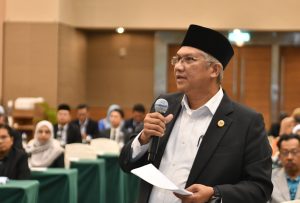
He also emphasised the importance of expanding strategic collaboration with international industries and institutions, particularly those providing opportunities for students to undergo industrial training abroad to enhance graduate employability.
Furthermore, he stressed the need to optimise the use of university facilities, strengthen international-standard academic publications, and adopt a more flexible approach in assigning lecturer duties based on individual strengths.
“An adaptive and flexible approach is essential to ensure that UUM remains relevant, sustainable, and excellent in the years ahead,” he concluded.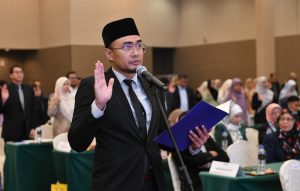
The session ended with an interactive question-and-answer segment involving university officials who participated in the three-day “Karisma Pemikir Madani” programme.
This was followed by the presentation of appointment letters to 95 deputy deans and deputy directors, and the recitation of the pledge led by Dr Syamsul Hirdi Muhid.