
SINTOK, 2 February 2026: Universiti Utara Malaysia (UUM) continues to strengthen integrity-based governance by emphasising the importance of seeking guidance from credible individuals to ensure that all decisions and actions are carried out responsibly, transparently, and free from leakage, misconduct, corruption and violations of leadership ethics.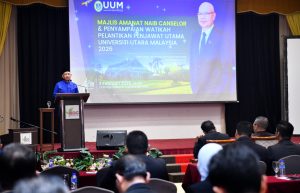
This key message was among the highlights delivered during the Vice-Chancellor’s New Year Address today, which also outlined several main focuses aligned with the Ministry of Higher Education’s (MoHE) seven thrusts for 2026. These include enhancing polytechnic management, strengthening alumni networks and adopting artificial intelligence (AI) technology.
Vice-Chancellor, Prof. Dr Ahmad Martadha Mohamed said that in an effort to empower the role of alumni, the Alumni Centre has been urged to adopt a more proactive and field-oriented approach by building networks and strengthening strategic relationships with university alumni who have achieved success in various sectors.
According to him, this effort is vital to enable alumni to contribute back to the university, particularly in terms of supporting campus welfare, institutional development and overall university advancement.
“In this regard, the university also plans to bring alumni back to campus through the organisation of more integrated and comprehensive programmes involving all departments and schools.
“This approach aims to ensure broader and more meaningful alumni participation,” he said.
In addition, the university is also committed to implementing reform initiatives in line with the national agenda to accelerate policy implementation, intensify reforms and improve communication and service delivery to the people. Slow work processes have been identified for review so that they can be expedited without violating existing regulations.
One example highlighted was the issuance period of postgraduate offer letters to postgraduate students which previously took several months. However, the university now aims to significantly shorten this process through the introduction of conditional offer letters, a practice already implemented by other institutions.
All departments were urged to reduce bureaucratic red tape and to avoid a culture of shifting responsibilities within the organisation. Instead, he called for a more dynamic, progressive and responsive work culture that prioritises the needs of university stakeholders, especially students.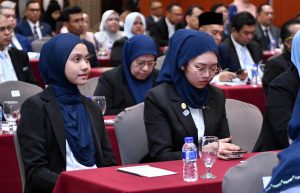
A comprehensive reassessment of existing regulations that may hinder student admissions will also be undertaken, reaffirming that students remain the university’s main focus. All these strategic directions will be refined and streamlined taking into account feedback from the University Board of Directors (LPU) and other stakeholders.
Also present were the Deputy Vice-Chancellor (Academic and International), Prof. Dr Mohd Azizuddin Mohd Sani; Deputy Vice Chancellor (Research and Innovation), Prof. Dr Ram Al Jaffri Saad, who is also performing the duties of the Deputy Vice-Chancellor (Student Affairs and Alumni); Registrar, Mr Ahmad Rasidi Abdullah and Bursar, Mr Mohtar Hasim.