
News and Pictures by: Dr. Zulfahmi, Islamic Business School
KUALA LUMPUR AND KEDAH, 21 June 2026 – The Graduate School of Sustainable Development of Universitas Indonesia (GSSD UI), in collaboration with Universiti Utara Malaysia (UUM), successfully organised a community service programme titled “Cross-Border Sustainability Initiative: Empowering Indonesian Migrant Workers through Sustainable Living.”
The programme was part of the Directorate for Community Service and Social Innovation (DPIS) UI’s Outbound World Class University (WCU) grant program, funded by the Indonesia Endowment Fund for Education (LPDP). It was organised by a team from the Department of Environmental Science of GSSD UI, led by Dr. Herdis Herdiansyah.
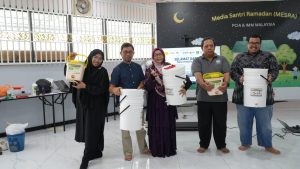
Through this initiative, the team visited two Indonesian migrant communities in Kuala Lumpur, with a focus on sustainable waste management. Each session began with an introduction on how everyday household activities contribute to waste accumulation before moving into practical activities related to sustainable waste management.
The first session was held at Rumah Hamka Malaysia on 14 June 2026. Rumah Hamka Malaysia is a community centre under the Board of Muhammadiyah Special Branch (PCIM) Malaysia. The session involved adult participants and focused on organic domestic waste, particularly kitchen leftovers and how such waste could be processed through composting.
Participants responded enthusiastically to the initiative and actively shared their experiences in managing household waste. One participant, Ms. Ernawati shared that she saw the potential of composting for her campsite business, where accumulated organic waste could benefit the soil and support vegetable cultivation. Another participant, Ms. Rida, shared that she had already been sorting recyclable materials such as plastic bottles and cardboard but had not yet processed organic waste. Inspired by the session, she expressed her intention to begin composting and eventually expand the practice on a larger scale.
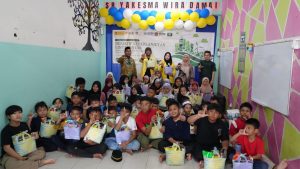
The following day, the team continued the programme at Sanggar Bimbingan Yakesma Wira Damai on 15 June 2026, this time focusing on children. Taking a more playful approach and interactive approach, the session introduced the basics of household waste management through Ecofunpoly, a gigantic educational board game. Ms. Lilis, a teacher at the centre expressed her appreciation and hoped that similar collaboration could be continued to provide children with further exposure to waste management education.
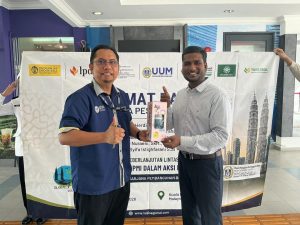
The programme resumed the following week in Kedah on 21 June 2026, with a visit to th
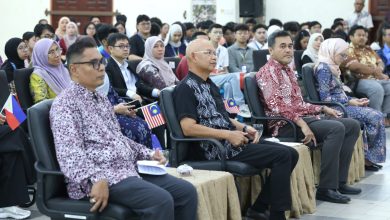
e UUM campus. The visit was facilitated by Dr. Zulfahmi and warmly welcomed by students from the Islamic Business School (IBS). The Dean, Prof. Dr. Selamah Maamor, also expressed strong support for the initiative.
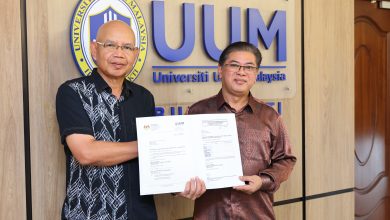
The meeting at UUM involved group discussions, knowledge sharing, and conversations on potential future collaborations. In addition to UUM, the programme was further strengthened through collaboration with academic partners from the International Islamic University Malaysia (IIUM) and Universiti Kebangsaan Malaysia (UKM).
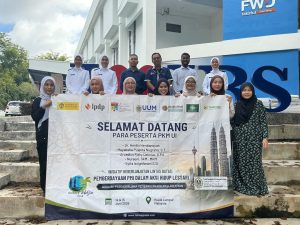
According to Dr. Zulfahmi, the programme received encouraging responses from both the migrant communities and participating academics. He encouraged more collaborative efforts in the future while emphasising the importance of planning activities well in advance to accommodate participants’ availability. This is particularly important for migrant workers, whose work schedules are often varied and determined by their employers. It is also relevant for students, who have to balance their participation with their academic commitments.
This initiative aims to strengthen ties between academic partners and Indonesian migrant communities. In the long term, such partnerships can help cultivate stronger environmental awareness and a sense of responsibility among communities and future generations.