
SINTOK, 18 June 2026: The Attorney General’s Chambers (AGC) is actively formulating and implementing a series of institutional and legal reforms aimed at creating a modern, responsive, and future-ready justice system in Malaysia.
Attorney General Tan Sri Mohd Dusuki Mokhtar said the rule of law is not a static concept, but a living framework that must constantly evolve to reflect changes in society.
He explained that institutional reform is more than an administrative exercise. It is essential to ensuring that the rule of law remains strong and relevant amid an increasingly complex social landscape.
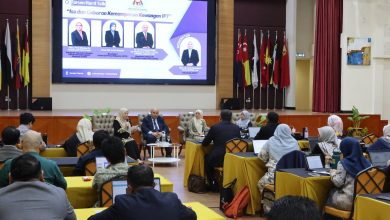
“Institutional reform is the engine that ensures this framework remains modern, structured and resilient, thus preserving the balance of justice in an increasingly dynamic world,” he said during the he explained in the CEO@Faculty Prime Lecture titled ‘Strengthening the Rule of Law Through Institutional Reform: Malaysia’s Roadmap for a Modern Justice System’ at the Universiti Utara Malaysia (UUM) Convention Complex today.
Among the most significant reforms currently being pursued is the separation of the roles of the Attorney General and the Public Prosecutor. According to him, the move is intended to establish a truly independent Public Prosecutor function, distinct from the Attorney General’s role as a legal adviser to the government.
The separation represents a major milestone in strengthening the prosecutorial independence and enhancing public confidence in the administration of the country’s justice system. It also reinforces the principle of separation of powers by ensuring that prosecution decisions are made independently and solely on legal considerations.
According to the Attorney General, Malaysia’s direction towards a modern justice system is also reflected in several key legislative initiatives, particularly efforts to modernise the country’s old legal framework.
Among these is the Pre-1969 Law Reform Study, which seeks to identify outdated laws that require amendment, revision, or repeal to ensure their continued relevance. The initiative includes a systematic review of existing legislation, the harmonisation of laws with contemporary developments, and adaptation of legal provisions to meet the needs of modern society.
AGC also contributed to the enactment of the Parliamentary Services Act 2025 [Act 869], which forms part of the broader institutional reform agenda. The Act grants Parliament greater autonomy in managing its personnel, financial and administrative affairs, through the establishment of a stronger governance and administrative framework to support the functions of Parliament.
In addition, the AGC is also spearheading efforts to improve access to justice through the Legal Aid and Public Defence Act 2026 [Act 878].
The new law is expected to expand access to legal services, particularly for rural communities and individuals with limited awareness of their legal rights.
The Act also introduces an online mechanism that enables members of the public to seek legal advice without having to visit legal aid offices physically, thereby making legal assistance more accessible and convenient.
Another major reform that received attention was the Freedom of Information Bill (RUU), which has received approval in principle by the Cabinet. The Bill aims to enhance public access to government-held information in line with the principles of transparency and accountability.
He said the AGC played a key role in ensuring that the proposed legal framework remains consistent with existing laws, while striking an appropriate balance between transparency and the protection of confidentiality and personal data.
The proposed establishment of the Ombudsman of Malaysia was also identified as an important institutional reform aimed at strengthening governance and addressing maladministration through an independent, transparent and accountable mechanism.
Highlighting the AGC’s operational achievements, Tan Sri Mohd Dusuki revealed that the Chambers successfully resolved 3,055 criminal appeal cases in 2025. In the first quarter of 2026 alone, 965 criminal appeal cases were resolved, reflecting the capability, discipline, and dedication of AGC officers in facilitating the efficient disposal of criminal appeals in the higher courts.
Beyond domestic reforms, the AGC continues to play a crucial role in international legal relations by ensuring that national legislation remains aligned with global standards and Malaysia’s obligation under international treaties. This includes coordinating Malaysia’s participation in international and regional platforms such as the United Nations (UN), ASEAN and the Commonwealth, as well as formulating and presenting the country’s legal positions.
All these initiatives demonstrate a systematic, integrated and continuous commitment to strengthening the rule of law through practical and targeted legal and institutional reforms.
He stressed that the AGC remains guided by the principle that law must constantly evolve to respond to society’s changing needs, while adapting to rapid technological advancements and the increasing demands of globalisation.