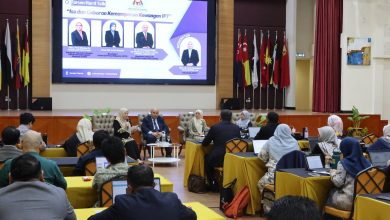

ALOR SETAR, 11 February 2026: The “Up Close & Personal” sharing session with the Chairman, “Rethinking Leadership for Public Universities: A Reflective Discourse with the Chairman of the University Board of Directors,” Tan Sri Dr Mazlan Yusoff, emphasised the importance of optimising workforce capacity in organisational development, particularly within the public sector, which comprises an estimated 1.3 million civil servants.
Central to the discussion was how this vast human resource potential can be effectively harnessed either in leadership practices or in the implementation of public policies.
Tan Sri Dr Mazlan delivered these reflections during the UUM Top Leadership MADANI Thinker Charisma Programme, held at Grand Alora yesterday.
Also discussed was the need for institutions, including higher education institutions (HEIs), to adapt to new operating models in order to remain relevant in an increasingly competitive global environment. Shifts in the economic landscape, technological advancements, and evolving global trends were identified as key factors shaping the future direction of organisational development.
In addition, human capital and innovation were cited as crucial drivers of progress, enabling organisations to respond swiftly and effectively to change. Clear leadership, strategic planning, and adaptive policy development were also underscored as essential components for sustaining the country’s long-term growth.
Tan Sri Dr Mazlan also stressed that stronger collaboration between institutions, government agencies, and other stakeholders needs to be strengthened to ensure that the development agenda can be implemented in a sustainable manner and deliver meaningful benefits to society.
The Importance of Entrepreneurship and R&D in Industry
During the session, Tan Sri Dr Mazlan also shared valuable perspectives on industrial development and entrepreneurship. He emphasised that research and development (R&D) have been fundamental drivers of company growth, particularly since the 1970s when many industrial firms began investing heavily in technological innovation.
According to him, technology-based companies flourished through strong R&D efforts, thus paving the way for the rise of global technology giants and transforming the international business landscape.
He also highlighted the importance of cultivating individuals with a “prospector” mindset—individuals whose key characteristics include being entrepreneurial, willing to pioneer new markets, and capable of identifying opportunities ahead of competitors.
While radical innovation is important, he noted that an incremental approach is equally critical. This approach ensures operational stability through the strengthening of internal processes, consolidation of business operations, and strategic adaptation to changing market demands.
The session also addressed the realities of industry challenges, including market pressures, shifting economic values, and the need for a continuous learning culture to ensure organisational competitiveness.
Balancing Innovation and Academic Quality
Turning to the higher education sector, Tan Sri Dr Mazlan urged universities to strike a balance between innovation and academic quality.
He emphasised that while universities must embrace technological advancement and innovative practices, they must also safeguard academic standards, particularly in the development of postgraduate programmes and emerging fields of study.
Universities and government institutions, he added, must act as responsive policymakers capable of adapting to global changes. This includes exploring new technologies, fostering entrepreneurial innovation, and developing resilient pedagogical approaches to prepare students for future challenges.
However, observations show that most organisational leaders tend to adopt cautious or defensive approaches when confronted with high-risk or untested innovations. While such caution helps maintain quality assurance and operational stability, it can also hinder the ability of institutions to adapt to rapid global change.
In this regard, educational institutions were urged to find a balanced approach that combines bold innovation with gradual, sustainable improvement. This is essential to ensuring that innovation can be implemented without compromising academic quality, while simultaneously enhancing the international competitiveness of universities.
Trust in Universities in an Era of Globalisation and Technology
Public higher education institutions today face increasingly complex challenges as their traditional roles are tested by rapid global transformation. Among the key issues raised were declining public trust, rising student debt, and the need to align academic education more closely with real-world demands.
According to Tan Sri Dr Mazlan, universities must reassess their broader social purpose while continuing to uphold institutional integrity and credibility. The erosion of trust in public institutions, he noted, is a global phenomenon that requires a thoughtful and strategic response from the education sector.
In addition, competition from technological advancements has also intensified pressure on universities to update their policies and learning approaches.
It was reported that only about 43 percent of higher education institutions currently have clear policies on the use of new technologies, while approximately 78 percent of stakeholders still lack a full understanding of their potential.
At the same time, concerns over education financing and student debt continue to demand more sustainable solutions to ensure that access to higher education remains equitable and inclusive.
Strengthening Research and Digital Transformation
Efforts to enhance research and development of digital technology require a more structured approach. Tan Sri Dr Mazlan emphasised the importance of optimising existing resources rather than focusing solely on new targets in order to sustain innovation and maximise research impact.
He outlined four key characteristics of effective research impact, which serve as important guidelines for ensuring that academic research delivers tangible benefits to society and contributes meaningfully to national development.
A New Approach to Stakeholder Engagement
A significant portion of the session focused on the importance of stakeholder engagement. Tan Sri Dr Mazlan emphasised the need to understand the roles of various stakeholders, namely students, management, alumni, and the wider community in strengthening institutional relationships and improving communication effectiveness.
He introduced the “two-by-two quadrant” analysis approach as a tool for assessing the level of influence and formality of different stakeholder groups. He explained that some groups, while informal, wield considerable influence and therefore deserve careful attention in organisational strategy.
Furthermore, he noted that even stakeholders with less formal authority play important roles, as they often possess valuable insights into community needs and sentiments.
In closing, Tan Sri Dr Mazlan reminded university leaders to continuously nurture relationships with stakeholders and to remain mindful of the evolving operating environment, particularly within the public sector.
This strategic and inclusive approach, he concluded, will enable organisations to make more informed decisions and ensure that communication with the community and relevant parties remains effective and meaningful.