
Integrity Remains the Strongest Defence Against Corruption in Higher Education Institutions – Kedah MACC Director

SINTOK, 19 May 2206: The inculcation of integrity among students and members of higher education institutions must be strengthened comprehensively to ensure that corruption is curbed from the early stages of shaping the younger generation.
Director of Malaysian Anti-Corruption Commission (MACC) Kedah Branch, Dato’ Nazli Rasyid Sulong said, that crimes, including corruption would never be completely eradicated as long as individuals continue to have opportunities to abuse power and betray trust.
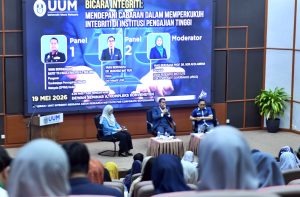
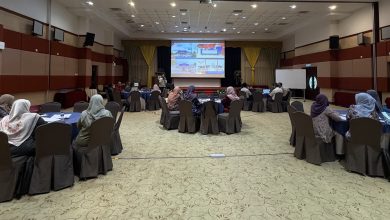
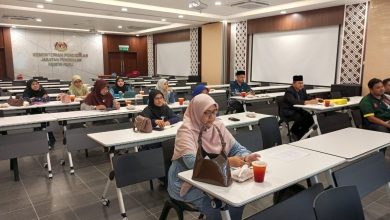
He said this when delivering a talk entitled ‘Facing Challenges in Strengthening Integrity in Higher Education Institutions’ at Seminar Hall A, Convention Complex, Universiti Utara Malaysia (UUM).
According to him, one of the primary challenges currently faced by higher education institutions is the effort to cultivate integrity among students, while also preventing corrupt practices involving university administrators, officers and staff.
He said that MACC places significant emphasis on nurturing a younger generation equipped with strong sense of integrity, enabling them to distinguish between right and wrong while understanding the potential conflicts of interest between organisational responsibilities and personal interests.
“Findings from a study conducted by MACC in collaboration with Universiti Kebangsaan Malaysia (UKM) in 2022 showed that about 30 percent of students were willing to engage in corruption.
“Following this, MACC has implemented various initiatives with public and private higher education institutions, including the establishment of Anti-Corruption Student Force, Anti-Corruption Heroes, Integrity and Anti-Corruption Course, as well as Student Anti-Corruption Volunteer Corps Cadet programme,” he said.
He added that the current approach to corruption prevention focuses on preserving and cultivating integrity through enforcement as well as more proactive preventive measure.
Meanwhile, the Head of Integrity Unit, Dr Mukhriz Mat Rus stated that every complaint received must be thoroughly examined, as not all information obtained necessarily reflects the actual situation.
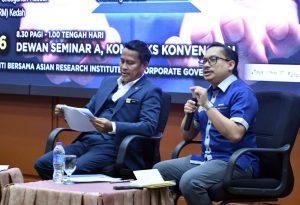
He noted that corruption cases are often difficult to prove, as they require cooperation from both the giver and the recipient of bribes to come forward and testify. This situation becomes even more complicated when parties involved are reluctant to escalate complaints to higher level.
He further emphasised that every organisation should establish a clear anti-corruption plan, including identifying potential risks and implementing strategic actions to strengthen governance.
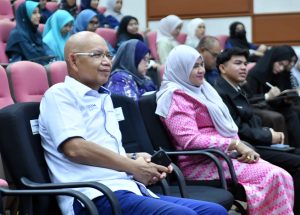
The programme, moderated by Director of ARICG, Prof. Dr Nor Afza Amran, was also attended by UUM Vice-Chancellor, Prof. Dr Ahmad Martadha Mohamed, together with senior university officials.
The talk concluded with a sharing session on the Corruption-Free Pledge, which emphasised five key principles, namely compliance with the law, rejection of corruption, ensuring that oneself and one’s staff are free from corrupt practices, and reporting any misconduct to MACC.