
7 Days of Wisdom Without Borders Highlights (Day #3)
Advancing Knowledge and Global Scholarly Exchange at Hebei Finance University (HFU), China

Pictures by Muhammad Naufal Norasikin @ Mohd Zulhilmi; Syed Haikal Syafiq Syed Mohd Fazli
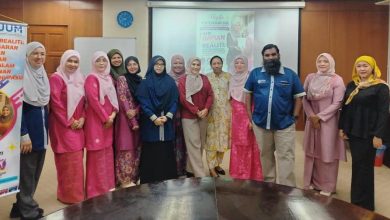
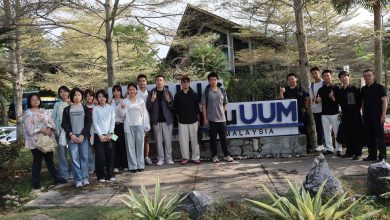
CHINA, 24 December 2025: As the Wisdom Without Borders (WWB) programme advanced into its next major highlight, Universiti Utara Malaysia (UUM) further strengthened its academic engagement in China through a large-scale plenary and keynote session hosted by Hebei Finance University (HFU). Following the postgraduate-focused forum earlier in the day, this session marked a strategic expansion of scholarly dialogue by bringing together senior academics, emerging researchers, and postgraduate students from both institutions within a shared intellectual platform.
Grounded in UUM’s commitment to meaningful global academic partnerships, Day #3 of the 7 Days of Wisdom Without Borders Highlights Series underscored the role of universities as centres of ethical leadership, innovation, and cross-cultural knowledge exchange. The session illustrated how international collaboration can extend beyond networking to foster sustained scholarly engagement, mutual learning, and collective responsibility in shaping future-ready education systems.
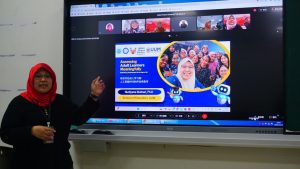
The programme commenced with a keynote address by Assoc. Prof. Dr Md Zawawi Abu Bakar, Dean of Awang Had Salleh Graduate School, College of Arts and Sciences, UUM. In his address entitled, Fostering a Culture of Integrity in Higher Education, he emphasised integrity as the cornerstone of a sustainable academic ecosystem. He highlighted that as higher education navigates rapid technological shift, including the growing influence of artificial intelligence, ethical leadership, transparency, and accountability must remain central to institutional decision-making and scholarly practice. His keynote established a reflective and principled tone for the sessions that followed.
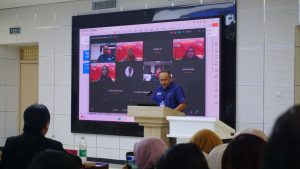
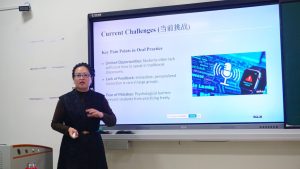
Building on this foundation, the programme continued with parallel hybrid plenary sessions conducted across two venues, featuring 21 speakers from UUM and HFU, alongside selected postgraduate presenters. Rather than operating as isolated presentations, the sessions were intentionally organised around shared global concerns, including leadership and governance, digital pedagogy, flexible learning, assessment innovation, and the integration of artificial intelligence in education. This thematic structure enabled participants to engage deeply with focused discussions while appreciating how diverse research perspectives intersect across national and institutional contexts.
Across both venues, discussions highlighted how educational leadership, instructional technologies, and assessment practices are being reimagined in response to evolving learner needs and global challenges. Contributions from UUM academics addressed issues such as leadership cultures in higher education, the scholarship of teaching and learning in digital environments, service learning, flexible curricula, and meaningful assessment for diverse learner populations. Complementing these contributions, HFU scholars shared insights into intercultural communication, digital empowerment, competency-oriented assessment, and AI-supported language learning, thereby enriching the dialogue with local and regional perspectives.
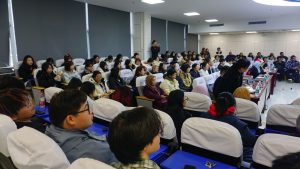
Notably, the inclusion of Master’s students alongside senior academics reinforced WWB initiative’s emphasis on inclusive scholarly development. Their active participation reflected a mentoring-oriented academic culture in which emerging researchers learn not only through presenting their work, but also through observation, dialogue, and critical engagement within an international academic setting.
Collectively, the dual-session format created a multidimensional scholarly environment. Participants were exposed to comparative perspectives on policy, pedagogy, and research priorities, revealing both contextual differences and shared aspirations between Malaysian and Chinese higher education systems. Common themes such as leadership ethics, digital transformation, learner-centred assessment, and AI integration underscored the value of collaborative inquiry in addressing complex educational challenges.
In reflecting on the outcomes of the day, the plenary and keynote sessions at HFU reaffirmed the central premise of the Wisdom Without Borders initiative, namely that the future of higher education depends on sustained international collaboration, open intellectual exchange, and a genuine willingness to learn across cultures. The hybrid format of the programme further reinforced this ethos by extending participation beyond physical boundaries and symbolising the interconnectedness that defines contemporary scholarship.
Day #3 of the 7 Days of Wisdom Without Borders Highlights Series therefore represented more than a sequence of academic presentations. It reflected a collective commitment by UUM, HFU, and their academic communities to build enduring scholarly bridges grounded in integrity, driven by innovation, and oriented towards global responsibility. As the WWB journey continues, the insights gained and connections forged during this session will serve as a strong foundation for deeper collaboration and sustained academic growth in the days ahead. – Dr. Nor Fauzian Kassim; Muhammad Hibatul Hakimi Yosri; Dr. Yeap Sock Beei