
UUM strengthens international academic collaboration through Mock Viva Sessions for IUIU Doctoral Candidates

News and photos Dr Sirajo Aliyu
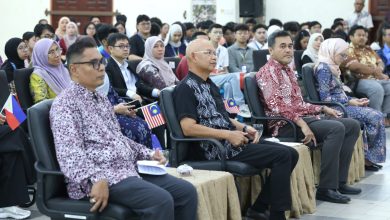
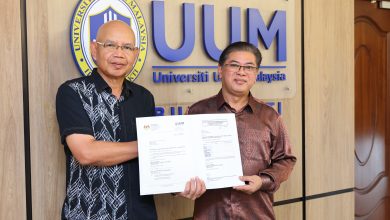
SINTOK, 9 July 2026: Universiti Utara Malaysia (UUM) has further strengthened its commitment to international academic collaboration by conducting a series of mock viva sessions for the first cohort of Doctor of Philosophy (PhD) candidates from the International Islamic University in Uganda (IUIU).
Held between 27 and 28 June 2026, the sessions marked a significant milestone in the strategic partnership between the two institutions, reflecting their shared commitment to enhancing postgraduate education, promoting academic excellence, and fostering cross-border knowledge exchange.
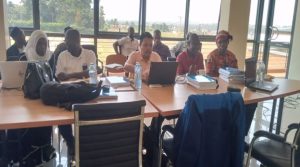
Established in 1988 by the Organisation of Islamic Cooperation (OIC) as one of Africa’s leading Islamic universities, IUIU has sought to leverage UUM’s academic expertise to strengthen the quality and rigour of its doctoral programmes. Spearheaded by the Dean of the Islamic Business School (IBS), Professor Dr Selamah Maamor, the collaboration has since evolved into a multidisciplinary initiative involving several UUM schools, including the Islamic Business School (IBS), the Tunku Intan Safinaz School of Accountancy (TISSA), the School of Business Management (SBM), the School of Economics, Finance and Banking (SEFB), and the School of Technology Management and Logistics (STML).
A panel of eight distinguished academics from UUM served as external examiners, contributing their scholarly expertise in evaluating the research work of IUIU’s pioneering doctoral candidates. Their diverse academic backgrounds underscore the breadth of expertise shared through this collaborative initiative.
Representing the Islamic Business School, Dr Nasri Naiimi examined a thesis on Islamic wealth creation and financial empowerment, while Dr Sirajo Aliyu evaluated research on psycho-behavioural drivers of tax compliance. Dr Muhamad Fikri Aziz reviewed a study on product customisation and business growth among culinary SMEs, Dr Nurul Huda Abdul Majid assessed research on the adoption of International Financial Reporting Standards, while Dr Mohammad Naim Abd Halim examined the integration of marketing communication and competitive advantage in private universities.
From the School of Economics, Finance and Banking, Dr Aznita Samsi reviewed a thesis examining the relationship between job satisfaction, self-leadership, and emotional intelligence. Meanwhile, Dr Faisal Zulhumadi of STML evaluated research on technological innovation and human resource management in biometric surveillance, while Associate Professor Dr Idawati Ibrahim of TISSA assessed a study on taxpayers’ perceptions and tax compliance among small and medium-sized enterprises (SMEs).
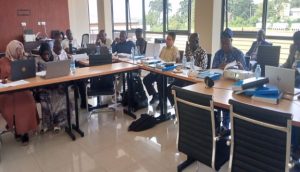
The mock viva sessions provided an invaluable platform for IUIU’s doctoral candidates to undergo rigorous academic scrutiny while receiving constructive feedback from experienced Malaysian scholars. The exercise also served as a vital preparatory stage before their final doctoral examinations, enabling the candidates to refine their research and strengthen their scholarly arguments.
The initiative reflects UUM’s broader aspiration to expand its international academic network and reinforce its position as a regional hub for higher education through sustainable, impactful, and mutually beneficial global collaborations.
Professor Dr Selamah Maamor has played a pivotal role in cultivating this international partnership. Under her leadership, IBS has actively pursued numerous collaborative initiatives, including academic exchanges, research partnerships, and curriculum development with international institutions. The collaboration with IUIU exemplifies UUM’s steadfast commitment to advancing academic excellence and extending its intellectual contributions beyond national boundaries.
The successful completion of the mock viva sessions marks another significant milestone in IUIU’s efforts to establish a robust doctoral ecosystem. By leveraging UUM’s academic expertise and quality assurance practices, the Ugandan university is better positioned to produce highly competent research graduates capable of making meaningful contributions to their respective disciplines and to the broader African academic landscape.
Looking ahead, the partnership between UUM and IUIU exemplifies the transformative potential of international academic collaboration. It demonstrates how higher education institutions can collectively strengthen postgraduate education, enhance research quality, and build sustainable academic capacity that transcends geographical boundaries.