
UUM ONLINE: The reform of the nation’s public service must begin with a fundamental transformation of values, integrity and work culture among civil servants to ensure that government policies are translated into meaningful and tangible benefits for the people.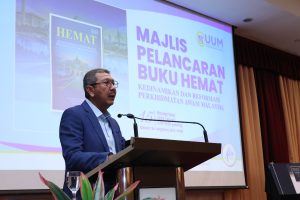
Chairman of the Board of Directors of Universiti Utara Malaysia (UUM), Tan Sri Dr. Mazlan Yusoff, said the success of administrative reform hinged on the ability of civil servants to uphold noble values, discharge their responsibilities with professionalism and embrace a work culture that was increasingly responsive, transparent and people-oriented.
He said civil servants were the backbone of the nation’s administrative machinery, with the effectiveness of government policies, economic prosperity, social well-being and public confidence in national institutions depending largely on the integrity and accountability with which they discharged their responsibilities.
He emphasised that no matter how comprehensive the strategic plans, substantial the financial allocations or well-structured the organisational framework, such efforts would not achieve their intended objectives if implementation continued to be constrained by bureaucratic red tape, delays and a lack of sensitivity to the needs of the people.
“Genuine reform calls for a comprehensive transformation in the way we think, make decisions, manage national resources and engage with the people with empathy and understanding.
“Civil servants must therefore look beyond the execution of routine duties and recognise their role as drivers of national development. They must remain receptive to change, strive to enhance productivity and embrace modern technologies, including artificial intelligence (AI), without compromising the fundamental principles of integrity and accountability,” he said when officiating at the launch of HEMAT: Kedinamikan dan Reformasi Perkhidmatan Awam Malaysia, published by UUM Press, at EDC-UUM yesterday.
The book outlines five core values under the HEMAT framework, namely Hijrah Tata Kelola, Empati Rakyat, Minda Pekin, Apresiasi Inovasi and Telus Tadbiran, which serve as guiding principles towards building a more dynamic, responsive and accountable public administration system.
He further reminded civil servants that the people were not merely clients of government services, but the very heartbeat that gave meaning and purpose to the existence of the public service.
He said a culture that valued creativity, encouraged openness to new ideas and embraced the willingness to move beyond outdated practices must be further nurtured to enhance organisational efficiency and ensure that public administration remained responsive to changing times.
Integrity and accountability, he stressed, must remain non-negotiable principles, as public confidence was fundamental to sustaining the credibility and strength of national institutions.
Elaborating further, he said the success of public service reform should not be measured solely by improvements in administrative systems or technological advancements, but also by the quality of public experience, the ease of accessing government services and the level of satisfaction among people when dealing with government agencies.
Meanwhile, Vice-Chancellor Prof. Dr. Ahmad Martadha Mohamed said the publication of the book carried significant implications for the advancement of knowledge, leadership and the nation’s public service reform agenda, particularly in strengthening the nexus between public values and effective service delivery.
He said the HEMAT framework was closely aligned with Public Value Theory, which underscored the importance of creating meaningful value and delivering tangible benefits to society through an effective system of public administration.
He noted that while technology could accelerate service delivery, values and integrity remained the defining factors in ensuring that public services genuinely upheld justice, promoted societal well-being and strengthened public confidence.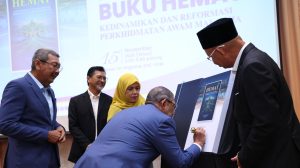
He also described the reform agenda spearheaded by the Director-General of Public Service, Tan Sri Dr. Wan Ahmad Dahlan Abdul Aziz, as a significant undertaking to strengthen the capacity and readiness of civil servants in responding to change and meeting contemporary demands.
Among the key initiatives is the Public Service Reform Agenda (ARPA), which places emphasis on instilling values and strengthening governance, developing human capital, enhancing organisational capacity and improving service delivery through greater synergy between the public and private sectors.
Similarly, efforts to enhance service delivery through the APTA initiative, which focuses on reducing bureaucratic red tape, reviewing regulations and expediting public transactions, reflect the growing need for a more efficient and results-driven approach to public service reform.
In this regard, he said UUM remained committed to further strengthening its strategic partnership with the Public Service Department (JPA) through collaborative efforts in research, policy development, postgraduate education and human capital development for the public sector.
One of the notable outcomes of this collaboration is a joint initiative involving UUM, the National Institute of Public Administration (INTAN) and JPA, which provides opportunities for Administrative and Diplomatic Officer (PTD) cadet officers to pursue the Master of Public Management programme.
The first cohort of the programme has attracted more than 100 participants, while enrolment for the second cohort is scheduled to commence next March.
He said the programme was strategically important in developing a new generation of civil servants who were not only well-versed in public administration but also equipped with the ability to think critically, analyse policies, lead organisational change and make evidence-based decisions.
He added that UUM was prepared to continue serving as a strategic think tank and research partner to JPA by leveraging the university’s expertise in public management, policy analysis, public sector financial governance, leadership and digital transformation.
Furthermore, he said the findings of the HEMAT Index held considerable potential for further development, particularly in establishing a framework for embedding values and conducting longitudinal assessments within government organisations to monitor changes in the internalisation of values among civil servants over time.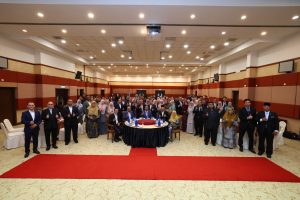
Such collaboration would also pave the way for research into the effectiveness of work processes, public experiences and the development of measurement instruments to assess public values and the quality-of-service delivery.
The book, HEMAT: Kedinamikan dan Reformasi Perkhidmatan Awam Malaysia, is jointly authored by Tan Sri Dr. Wan Ahmad Dahlan Abdul Aziz, Prof. Dr. Mohd Kamarulnizam Abdullah and Assoc. Prof. Dato’ Dr. Junaidi Abu Bakar.
The publication is expected to serve as an important reference for leaders, policymakers, civil servants and academics in gaining a deeper understanding of the challenges and future direction of national administrative reform. It also reinforces UUM’s role as an institution of higher learning that contributes meaningfully to the nation’s development and progress.
Also present at the ceremony were member of the UUM Board of Directors Prof. Dr. Sany Sanuri Mohd Mokhtar; Dean of the School of Government (SOG), Prof. Dr. Halimah Abdul Manaf; members of the academic and administrative staff and students.