
7 Days of Wisdom Without Borders Highlights (Day #7)
Reflecting on a Journey of Postgraduate Mobility, Transformation, and Global Engagement Beyond the Great Wall

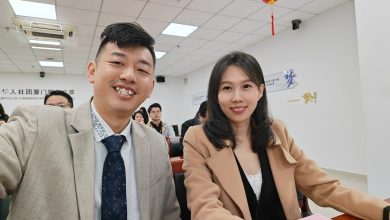
Pictures Muhammad Naufal Norasikin @ Mohd Zulhilmi, Norfatimah Tarmizi, Zhang Zhao, Nabil Mazlan, Assoc. Prof. Dr. Nurliyana Bukhari
SINTOK, 28 January 2026: The Wisdom Without Borders (WWB) programme has formally concluded its on-ground implementation in China. What remains, however, is the journey itself, one that has been thoughtfully documented and shared through the *7 Days of Wisdom Without Borders Highlights* series, released progressively from late November through January. This reflective series has invited the Universiti Utara Malaysia (UUM) community to collectively engage with the programme’s learning experiences, personal transformation, and lasting impact.
From 22 to 28 November 2025, a delegation from the School of Education (SOE), UUM supported by the Awang Had Salleh Graduate School of Arts and Sciences (AHSGS) undertook an academic networking and mobility programme in China.
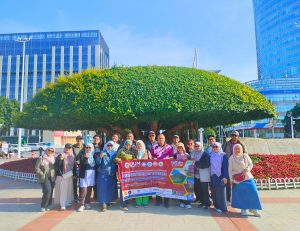
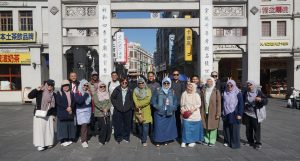
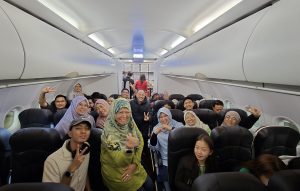
Led by Assoc. Prof. Dr. Md Zawawi Abu Bakar, Dean of AHSGS, the delegation comprised academic staff and fifteen postgraduate students, most of whom were PhD and EdD candidates, alongside several Master’s students. The journey unfolded amid unexpected logistical challenges, including prolonged flight delays, extended transit hours, sleepless nights, and a final diversion caused by severe weather conditions. These disruptions tested physical endurance and emotional resilience, yet they also revealed the strength of collective solidarity, adaptability, and shared responsibility within the group.
Rather than detracting from the programme’s objectives, these challenges became formative learning moments. Participants navigated uncertainty together, strengthening trust, composure, and mutual care, qualities that lie at the heart of meaningful postgraduate mobility and scholarly endeavour.
Reflections by Muhammad Hibatul Hakimi Yosri, Amir Syafiq Amran and Nor ‘Ain Mohamad Hadis consistently revealed how early frustrations evolved into lessons in patience, emotional regulation, and resilience. As one participant observed, what initially felt like a setback later became a reminder of how unpredictable, demanding, and profoundly transformative international mobility can be.
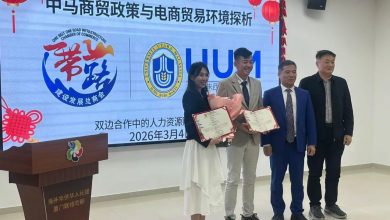
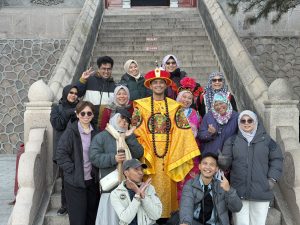
Throughout the programme, the delegation engaged in a rich spectrum of academic and intercultural activities across Beijing, Baoding, Qinzhou and Nanning. These engagements included university and school collaborations, scholarly dialogues, postgraduate empowerment forums, research sharing platforms, and immersive cultural experiences. Collectively, these interactions expanded academic networks, deepened intercultural understanding, and strengthened UUM’s presence within the broader One Belt One Road higher education ecosystem.
Beyond formal academic exchange, the programme nurtures a strong and enduring scholarly community among the postgraduate participants. Reflections revealed a profound shift in perspective, from viewing postgraduate study as a solitary pursuit to recognising it as a shared intellectual journey. Peer encouragement, open dialogue, and collective problem-solving emerged as central sources of confidence and perseverance.
As reflected by Muhammad Asyraf Shuib, the experience affirmed the value of “having a community of scholars who are like-minded and supportive,” challenging the long-held notion that postgraduate study must be an isolated endeavour. Comparable reflections by Fathini binti Badrudin and Zhang Zhao emphasised growing openness, intercultural sensitivity, and a renewed willingness to move beyond personal comfort zones.
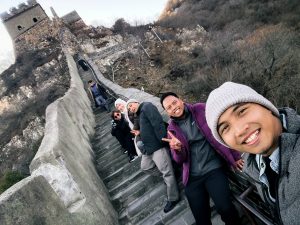
Through these experiences, participants reported the development of essential capacities, including cross-cultural communication, global awareness, emotional resilience, leadership readiness, and professional maturity. These competencies are increasingly vital for scholars navigating complex, interconnected academic and societal landscapes, reflecting the broader purpose of postgraduate mobility as a holistic developmental process that extends far beyond technical knowledge acquisition.
The programme also offered meaningful insights into leadership and purpose-driven academic work. Participants involved in coordinating and supporting the delegation reflected on the emotional significance of witnessing collective growth and shared accomplishment. One reflection noted that leadership during the programme was “not about perfection, but about supporting others so they can shine” (Toh Yong Bing).
This perspective was further deepened through a reflective narrative on the programme’s lifecycle, from its initial conception as a written proposal to its culmination through reflective documentation, illustrating how scholarly work, when guided by intention and wisdom, becomes a transformative journey in its own right (Nurhafidzah Binti Abu Samah).
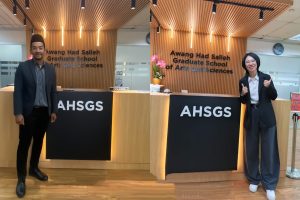
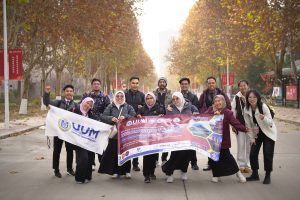
As the on-ground programme concluded, the WWB journey continued through reflection and storytelling. The decision to curate and release seven thematic highlights over time was intentional, enabling the wider UUM community to engage with the experience beyond a single event or moment. Through this approach, WWB evolved into a shared institutional narrative of learning, growth, and global engagement, rather than a one-off mobility activity.
Beyond formal programme outcomes, WWB also fostered enduring scholarly bonds among the postgraduate participants. In the weeks following the mobility programme, two members of the delegation successfully completed their viva voce examinations in early January. While these achievements were the result of sustained individual effort, supervision, and rigorous preparation, the continued peer encouragement and shared motivation within the WWB cohort reflected the lasting academic community formed before, during, and after the journey.
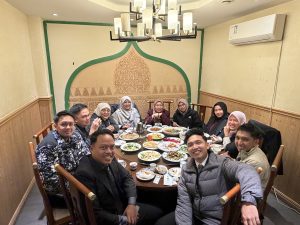
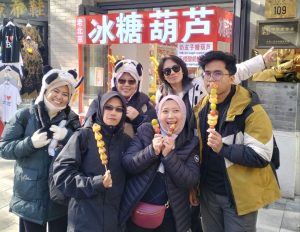
The School of Education extends its sincere appreciation to AHSGS and UUM leadership for their steadfast administrative and institutional support, which played a vital role in enabling this initiative. Gratitude is also extended to all participating academics and postgraduate students for carrying the UUM name with professionalism, discipline, humility, and integrity throughout the programme.
As the Wisdom Without Borders series draws to a close, this China postgraduate mobility programme stands as a powerful reminder that global learning is not defined by destinations or itineraries alone, but by the transformation it enables and the communities it builds. By sharing this journey with the wider UUM community, WWB hopes to inspire continued conversations on meaningful postgraduate mobility, enduring scholarly engagement, and the many ways learning continues to transcend borders long after the journey itself has ended. – Toh Yong Bing, Nurhafidzah Abu Samah and Assoc. Prof. Dr. Nurliyana Bukhari