
UUM delegation explores trusted AI for research and academic excellence at Clarivate Day Malaysia 2026

News and photos Assoc. Prof. Dr. Siti Nazuar Sailin
KUALA LUMPUR, 6 August 2026: Universiti Utara Malaysia (UUM) reaffirmed its steadfast commitment to research excellence and digital innovation through the active participation of a four-member delegation at Clarivate Day Malaysia 2026, held at Le Méridien, Kuala Lumpur.
The event brought together researchers, journal editors, librarians and higher education leaders from across Malaysia to deliberate on how trusted artificial intelligence (AI) is reshaping research methodologies, pedagogy and academic librarianship.
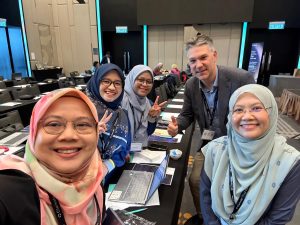
Representing the university were Associate Professor Dr. Hasniza Nordin, Chief Editor of the Malaysian Journal of Learning and Instruction (MJLI), and Associate Professor Dr. Siti Nazuar Sailin, Section Editor of MJLI, together with Ms. Siti Noraini Ismail, System Librarian, and Ms. Noraini Alias, Senior Librarian, from Perpustakaan Sultanah Bahiyah (PSB). Invited as featured panellists for the Customer Experience Sharing Session, the PSB representatives underscored the library’s growing reputation as a strategic partner in advancing research excellence, scholarly communication and innovative library services.
Centred on the theme “Powering Research, Learning, and Librarianship with Trusted AI,” the symposium featured the unveiling of Web of Science Research Intelligence, Clarivate’s AI-native platform engineered to help institutions strengthen research strategies, discern funding and collaboration pathways, and substantiate research impact through verified data and responsible AI framework. Delegates explored cutting-edge advancements in AI-assisted research discovery, research analytics, institutional reputation management, research information management, digital engagement and library transformation.
During the panel discussions, Ms. Siti Noraini Ismail shared how academic library collection development has evolved past traditional print materials into a dynamic, multifaceted digital resource. She emphasised that modern collection management extends beyond mere content acquisition; it necessitates rigorous metadata standards, seamless system integration and enhanced discoverability to enable access for both human scholars and AI-powered analytical tools. She also noted that as generative AI becomes increasingly embedded in research workflows, assessing AI readiness has emerged as a crucial benchmark in evaluating and acquiring future library resources.
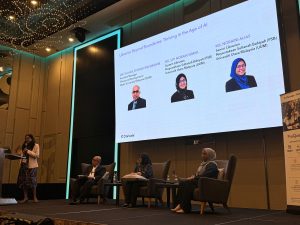
Expanding on this narrative, Ms. Noraini Alias maintained that despite rapid technological leaps, academic libraries remain indispensable as custodians of trusted, curated and authoritative knowledge. While AI accelerates information synthesis, libraries serve as a vital counterweight by training scholars to critically evaluate both conventional and AI-generated content. She stressed the necessity of cultivating robust information and AI literacy to ensure students and faculty use AI responsibly, ethically and effectively.
Reflecting on the event’s broader implications, Dr. Hasniza Nordin underscored the importance of adopting AI-enabled library ecosystems to enhance research support and scholarly communication.
“Academic libraries are no longer merely repositories of information; they are becoming intelligent partners in research. By leveraging platforms such as Alma and Nexus, libraries can deploy AI-enhanced discovery services, streamline research workflows and provide more personalised support for researchers and students. This evolutionary leap is vital for universities seeking to strengthen research excellence and global visibility.”
Speaking in her capacity as Chief Editor of MJLI, the School of Education’s (SOE) Scopus-indexed journal published by UUM Press, Dr. Hasniza added that trusted AI technologies can further enhance scholarly publishing by improving article discoverability, supporting evidence-based editorial curation and elevating overall institutional research performance.
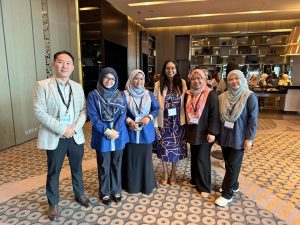
The event also highlighted the growing role of AI-powered research assistants integrated directly into primary scholarly databases such as Web of Science and Scopus. These trusted AI capabilities are transforming how researchers discover literature, identify research gaps, synthesise evidence and make informed research decisions.
Commenting on these advancements, Dr. Siti Nazuar Sailin noted that such technologies should serve to augment rather than replace researchers’ expertise and critical thinking.
“AI-powered research assistants embedded within trusted scholarly databases such as Web of Science and Scopus are reshaping the research journey. Beyond retrieving information, these intelligent tools help researchers explore relevant literature more efficiently, identify emerging research trends and gaps, and support evidence-based decision-making. However, AI should complement, not replace, researchers’ critical thinking and academic judgement. The synergy between trusted AI platforms, responsible AI, and human expertise will be key to advancing high-quality research and scholarly publishing.”
The joint involvement of PSB and MJLI’s editorial leadership exemplifies UUM’s holistic approach to cultivating an integrated academic environment where trusted AI, scholarly publishing and modern library infrastructures operate in tandem.
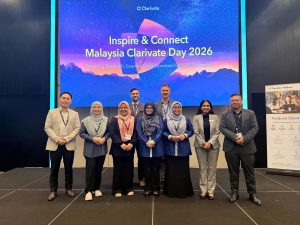
Looking ahead, the delegation expressed hope that UUM will continue to strengthen its digital research ecosystem by expanding access to the AI-enabled capabilities showcased during Clarivate Day Malaysia 2026. While PSB currently subscribes to an extensive suite of premier scholarly resources, several advanced AI-supported features demonstrated during the event are not yet available under the University’s current subscriptions. The representatives believe that wider adoption of these capabilities would empower researchers, academics and students through smarter literature discovery, AI-assisted research workflows, and more efficient access to trusted scholarly knowledge.
Such strategic investments stand to reinforce UUM’s research support services, boost international research visibility and solidify the University’s aspiration to be a leading institution in research, innovation and academic excellence in the era of trusted AI.