
UUM students immerse themselves in experiential tourism learning at Penang Cruise Terminal

News and photos Liew Sien Leong
PENANG, 9 June 2026: Students enrolled in the GHZMK3053 Tourism Transportation course at Universiti Utara Malaysia (UUM) recently participated in Penang Edu Trip 2026, an immersive academic site visit designed to deepen their understanding of tourism transportation through direct engagement with industry practitioners and operational environments.
Organised by students of the GHZMK3053 Tourism Transportation course in collaboration with the Event Management Students’ Society (EMSS), the programme brought together 63 participants, including two accompanying lecturers, Mr. Liew Sien Leong and Miss Pavithra A/P Dorasamy. The educational excursion featured visits to the Penang Port Cruise Terminal, Swettenham Pier and the Penang Ferry Museum, providing students with valuable insights into the operational and strategic dimensions of tourism transportation.
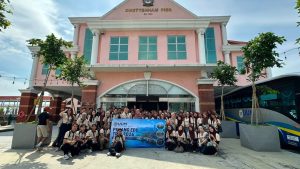
Conceived as an outdoor classroom, the programme offered participants the opportunity to bridge the gap between theoretical knowledge and industry practice. Through first-hand observation and interaction, students gained a deeper appreciation of port operations, ferry transportation services, cruise terminal management, and the critical role transportation infrastructure plays as a gateway to tourism destinations.
According to the course lecturer and programme advisor, Mr. Liew Sien Leong, experiential learning initiatives such as site visits are instrumental in enhancing students’ understanding of the tourism transportation sector by exposing them to real-world industry settings.
“Through this visit, students gained first-hand exposure to the cruise terminal environment, including passenger flow management, terminal facilities and supporting services. The presence of the Star Voyager at the terminal further enriched their learning experiences, enabling them to better understand cruise tourism operations and explore potential career pathways within the industry,” he said.
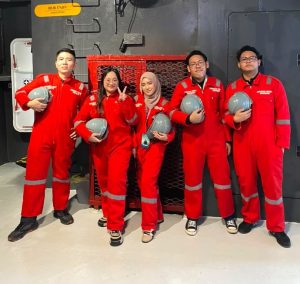
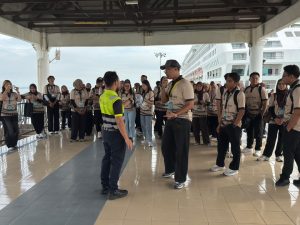
The programme began with a journey from Sintok to Penang, followed by a guided visit to the Penang Port Cruise Terminal at Swettenham Pier. During the visit, participants were introduced to the functions and operational mechanisms of an international cruise terminal while observing how port facilities facilitate visitor movement and contribute to the growth of cruise tourism in Penang.
Students were subsequently brought to the Penang Ferry Museum, where they explored the historical evolution of ferry transportation and its enduring contribution to the state’s maritime heritage. The itinerary also included a visit to a coastal attraction, allowing participants to observe how waterfront environments enhance destination appeal, enrich visitor experiences, and support tourism development.
To reinforce learning outcomes, the programme incorporated observation exercises, group-based activities, and reflective discussions. These components encouraged students to critically evaluate industry practices and apply concepts learned in the classroom to authentic operational settings.
Programme Director, Muhammad Zarith Fahmi bin Azman, a final-year Bachelor of Tourism Management (Hons.) student, described the experience as both enriching and rewarding.
“I found the experience incredibly meaningful because it challenged me to strengthen my leadership, communication, and problem-solving skills. Visiting Swettenham Pier and the Penang Ferry Museum also deepened my understanding of maritime operations and heritage tourism. Seeing participants benefit from the programme made all the effort worthwhile,” he said.
Beyond academic enrichment, the programme provided a platform for students to cultivate essential employability skills, including teamwork, communication, leadership, critical thinking, and problem-solving. Exposure to real-world working environments enabled participants to better appreciate the contribution of transportation services to tourism development, destination image, and visitor satisfaction.
For Reetha A/P Santhanasamy, a second-year Bachelor of Tourism Management (Hons.) student, the visit transformed abstract classroom concepts into tangible learning experiences.
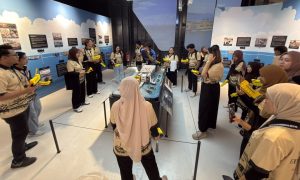
“Before this trip, my understanding of cruise and ferry operations was largely theoretical. Visiting the Penang Port Cruise Terminal and Penang Ferry Museum allowed me to witness how passenger movement, service delivery, and port operations are managed in practice. The interactive activities also strengthened teamwork and communication among participants, making the learning experience more engaging and memorable,” she said.
Programme Secretary Nur Suhaila Binti Nadzri, a final-year Bachelor of Event Management (Hons.) student, echoed similar sentiments, noting that the visit provided valuable insights into the operational complexities of cruise terminals and their significance to Penang’s tourism ecosystem.
“I gained a clearer understanding of passenger management, terminal facilities, and cruise operations. It was fascinating to observe how these components are coordinated in a real industry environment,” she said.
Meanwhile, final-year Bachelor of Tourism Management (Hons.) student Nur Alia Farhana highlighted the broader professional value of the programme.
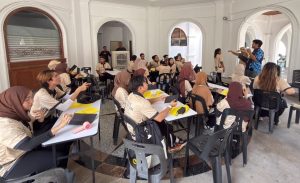
“This field trip offered meaningful exposure beyond the classroom. It helped me understand how theoretical concepts are applied within the industry while enhancing my teamwork and communication skills. More importantly, it opened my eyes to potential career opportunities within the tourism transportation sector,” she said.
The success of Penang Edu Trip 2026 was made possible through the collective efforts of the course lecturer, the student organising committee, EMSS, Penang Port Sdn. Bhd., the Penang Ferry Museum, and all participating students. Their commitment and cooperation ensured the smooth execution of the programme and contributed significantly to its educational value.
Beyond the immediate learning outcomes, the visit also created opportunities to strengthen collaboration between Penang Port Sdn. Bhd., the Penang Ferry Museum, and the School of Tourism, Hospitality and Event Management (STHEM), UUM. Potential areas of collaboration include internship placements, industry talks, professional training sessions, academic visits, and knowledge-sharing initiatives.
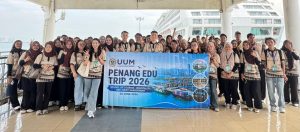
Such partnerships are expected to narrow the gap between classroom instruction and professional practice by providing students with early exposure to workplace expectations, operational procedures, and industry standards. Through sustained engagement with industry stakeholders, students will be better equipped to navigate careers in tourism transportation, cruise tourism, port services, and related sectors.
Ultimately, Penang Edu Trip 2026 exemplified the value of experiential learning in higher education. By bringing students directly into the heart of the tourism transportation industry, the programme not only enhanced academic understanding but also strengthened academia-industry linkages and contributed to the development of competent, industry-ready graduates capable of thriving in an increasingly dynamic tourism landscape.