
Photos Putra Muhammad Aliff Daniel Azri
LANGKAWI, 27 April 2026: The second day of a three-day edutourism programme in Langkawi Island took 65 inbound mobility and full-time international students from Universiti Utara Malaysia (UUM) deeper into the island’s ecological splendour, offering an unforgettable experience shaped by environmental stewardship, outdoor adventure, and immersive learning.
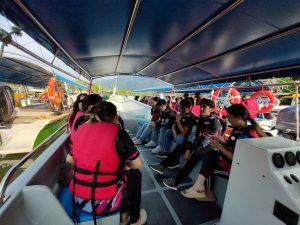
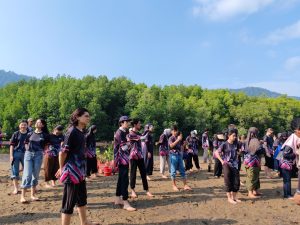
The day began with an engaging and insightful briefing by Mr Othman Ayeb, a Geopark Guide and Geopark Ambassador for Langkawi Island, who drew participants into the island’s remarkable geological narrative. Through vivid storytelling, he introduced them to Langkawi’s ancient geological formations, its distinction as a UNESCO Global Geopark, and the enduring local legends surrounding Gunung Mat Cincang, Gunung Raya, and Gunung Mat Sawar.
Among the many captivating insights shared was the ecological importance of the Kubang Badak Mangrove area, which serves as a seasonal sanctuary for nearly 600 bird species between December and February. The revelation that birdwatchers from Japan, China and Europe regularly visit the area to observe migratory birds further deepened the students’ appreciation of Langkawi’s extraordinary biodiversity and international ecological significance.
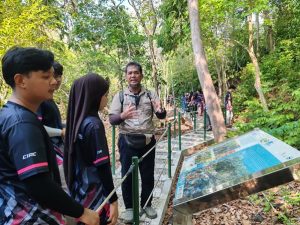
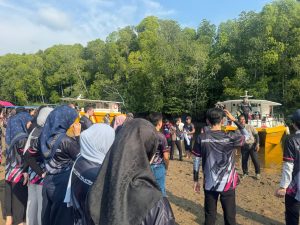
At the heart of the day’s itinerary was a meaningful mangrove conservation initiative, during which the UUM delegation, with the support of the Kedah State Forestry Department (JPNK), planted 150 mangrove seedlings within the Kubang Badak ecosystem.
Before the planting session commenced, officers from JPNK briefed participants on the purpose and long-term significance of the initiative, explaining how mangrove conservation contributes to shoreline protection, biodiversity preservation, and climate resilience. For many, it was the first time they had stepped into a muddy mangrove habitat—a moment that was met with laughter, curiosity, and delight, as students embraced the unfamiliar terrain with spirited enthusiasm.
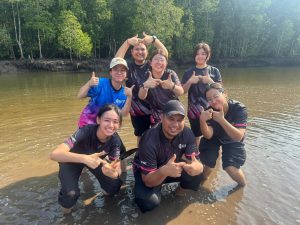
What began as a conservation activity soon evolved into a living classroom, where sustainability was no longer an abstract concept confined to lectures, but a tangible experience felt beneath their feet and shaped by their own hands.
Adding to the warmth and hospitality of the day, JPNK also generously provided packed meals for all participants, allowing them to rest and recharge before the next leg of the journey.
The experience then shifted from the earthy textures of the mangrove to the soothing beauty of one of Langkawi’s stunning beaches, where participants had the opportunity to unwind, take in the sea breeze, capture memorable photographs and savour the island’s famed coastal charm. After a day defined by mud, mangroves, and meaningful engagement, the beach offered a fitting contrast —serene, restorative, and deeply memorable.
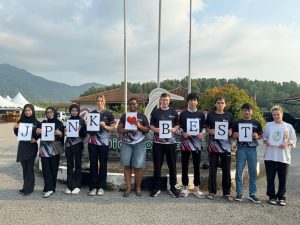
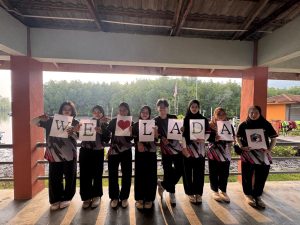
Accompanied throughout by CIAC staff, CIAC interns, and members of the Global Buddies Club (GBC), the programme once again demonstrated the power of experiential learning to connect international students not only with nature and local culture, but also with one another.
More than a field excursion, the second day of the programme embodied the spirit of global citizenship in action. Through conservation, cultural exchange, and shared discovery, participants came to understand that even the simple act of planting a single mangrove can symbolise hope, responsibility, and collective action towards a more sustainable future. In Langkawi, they did not merely witness sustainability; they became part of it. – Mohd Azri Abdul Aziz